
October 18 is Persons Day in Canada.
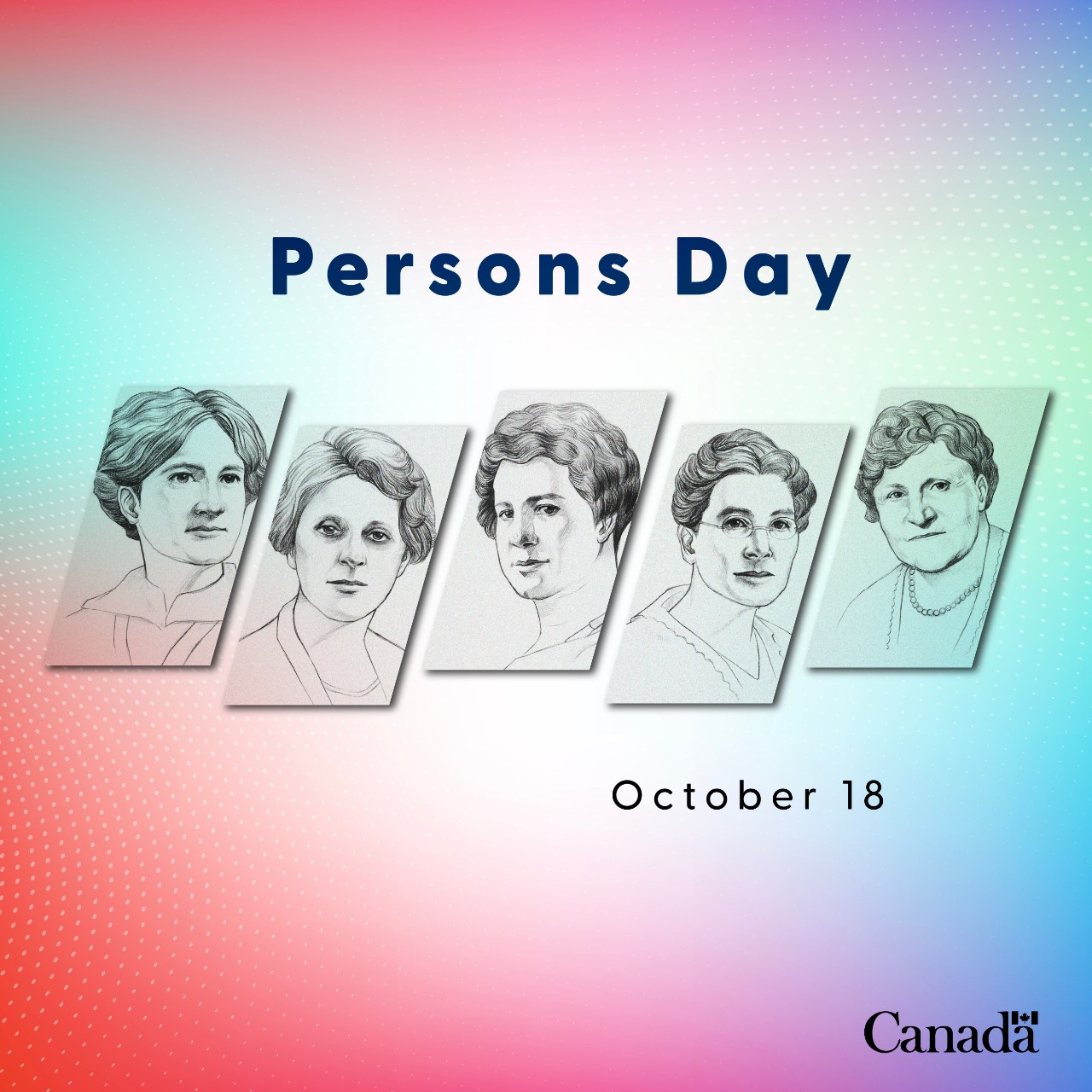
It marks the day in 1929 when the historic decision to include women in the legal definition of “persons” was handed down by Canada’s highest court of appeal. This gave some women the right to be appointed to the Senate of Canada and paved the way for women’s increased participation in public and political life. Though this decision did not include all women, such as Indigenous women and women of Asian heritage and descent, it did mark critical progress in the advancement of gender equality in Canada.
Click here for more information regarding the history of Person’s Day in Canada.
Until 1951: Canada’s federal Indian Act explicitly defined a “person” in its interpretation section as “an individual other than an Indian,” codifying a legal framework that treated First Nations individuals under a separate system instead of allowing them full civic equality.
1951 Amendment: Parliament amended the Indian Act and removed the explicit definition stating that an Indian was not a person, dismantling that specific statutory barrier to legal standing. However, heavy government controls, restrictions on movement, and denial of the federal vote remained.
Suffrage and Full Citizenship Recognition
- 1960: Status First Nations people finally achieved unconditional federal voting rights without being forced to give up their Indian status, marking a critical benchmark for full political and legal participation as Canadian citizens.

